
Bold City Roofing & Solar
TPO Roofing
Roofing material guide / 05
TPO Roofing in Florida
A reflective single-ply membrane designed for large low-slope and commercial roofs.
- Typical fit
- Commercial buildings and larger low-slope roofs
- Typical lifespan
- Often 20–30 years, depending on membrane and upkeep
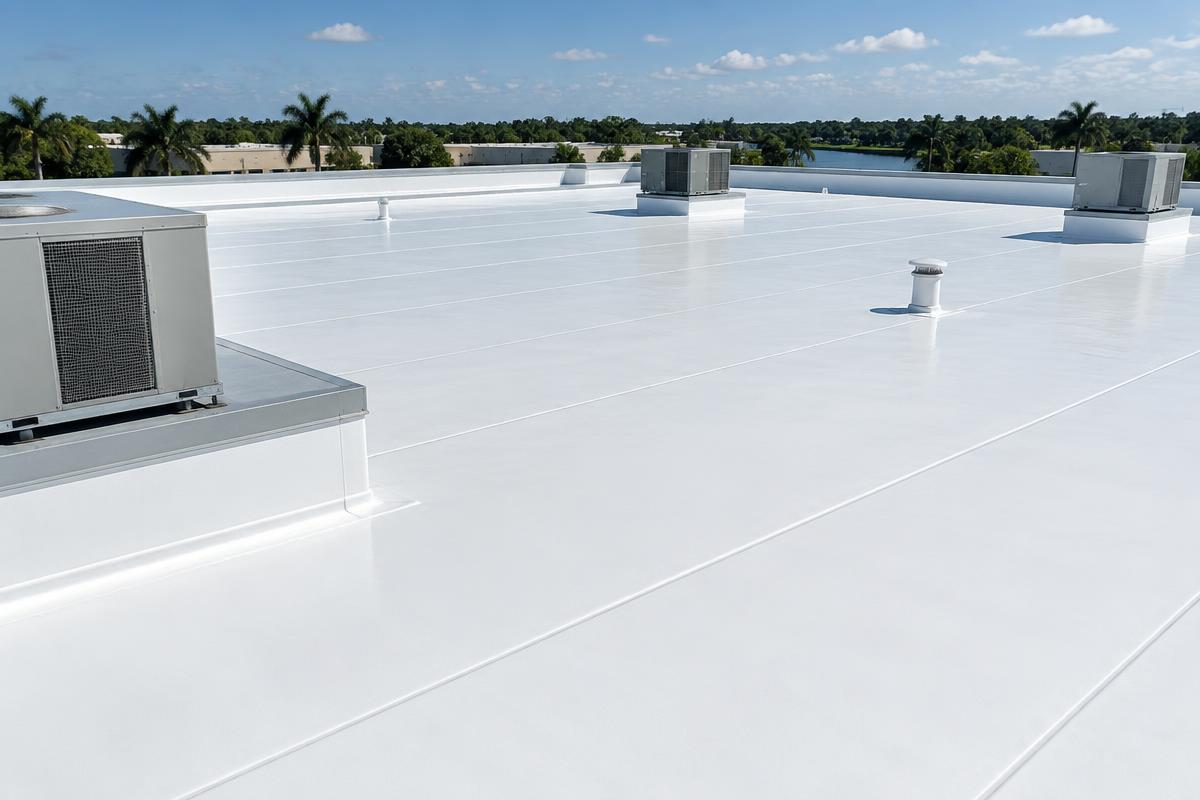
TPO stands for thermoplastic polyolefin. Its light-colored single-ply membrane is commonly used on commercial roofs because it can cover large areas efficiently and its seams can be joined with hot air. The complete assembly, not just the white sheet, determines performance.
Membrane and attachment options
TPO comes in different thicknesses and can be mechanically attached or fully adhered over an appropriate roof deck and insulation. The best assembly depends on wind design, rooftop traffic, existing conditions, and the building's energy goals.
Hot-air-welded seams join adjoining sheets. Quality control on welds, edge terminations, and flashing around equipment is crucial, especially where Florida storms create wind uplift and heavy rain.
Reflectivity and insulation
White TPO reflects much of the sun's energy and may reduce summer roof surface temperatures. The effect on indoor cooling costs varies with insulation, HVAC, occupancy, and the rest of the building. A proper insulation plan often matters as much as membrane color.
Ponding water and insufficient drainage still need attention; a reflective membrane cannot correct an underlying slope problem.
Repairs and life-cycle planning
Punctures from dropped tools, storm debris, or equipment work should be repaired promptly with compatible materials and proper welding. Rooftop equipment changes should be coordinated with a roofer so new penetrations remain watertight.
Periodic inspections can catch loose edges, open seams, damaged flashing, and blocked drains before they become costly interior leaks.
Why homeowners choose it
- Reflective surface for warm climates
- Hot-air-welded seams
- Efficient coverage on larger low-slope roofs
- Repairable with compatible membrane
Things to weigh
- Not for conventional steep-slope homes
- Susceptible to punctures from rooftop traffic or debris
- Seam quality and edge detailing demand experienced crews
Care & maintenance
Schedule regular inspections of seams, drains, edges, and equipment penetrations, plus a check after major storms or rooftop equipment work. Keep drains clear and repair cuts or punctures quickly.
Common questions
Is TPO only for commercial buildings?
No, but it is most commonly used on larger low-slope commercial roofs. Some residential flat-roof sections may also be candidates depending on design and site conditions.
Can a TPO roof be walked on?
Occasional service access is expected, but repeated traffic can damage the membrane. Walk pads can help protect routes to frequently serviced equipment.
From our crews
Our TPO Roofing Projects
Project photos for this roof type will appear here when available. The image above is an illustration, not one of our jobs.