
Bold City Roofing & Solar
Modified Bitumen Roofing
Roofing material guide / 04
Modified Bitumen Roofing in Florida
A layered asphalt-based membrane for low-slope roofs, porches, additions, and flat sections.
- Typical fit
- Low-slope residential and commercial roof sections
- Typical lifespan
- Often 15–25 years, depending on assembly and exposure
Modified bitumen combines asphalt with polymer modifiers for flexibility and strength. It is commonly installed as part of a multi-ply low-slope assembly, offering a robust weather barrier where conventional shingles are not suitable.
How the system works
A typical assembly combines a prepared deck, base or insulation layers where specified, and a protective cap sheet. Depending on the product and building, layers may be torch-applied, cold-adhered, self-adhered, or mechanically attached. The correct method is chosen for the structure and fire-safety requirements.
SBS-modified products emphasize flexibility; APP-modified products have different heat and weathering characteristics. The selected system should match the roof's slope, drainage, exposure, and expected foot traffic.
Seams and drainage matter
Overlaps, terminations, parapets, drains, and transitions to pitched roofs must be detailed carefully. A good membrane cannot compensate for poor drainage: standing water can shorten the life of many roof assemblies and should be evaluated as part of the project.
Granulated cap sheets and reflective coatings are available. A coating can help with solar exposure when specified for the membrane, but it is not a substitute for sound seams and flashing.
When it makes sense
Modified bitumen is a practical fit for smaller flat roof areas and roof sections that see occasional maintenance access. It also works where a low-slope addition joins a shingle, tile, or metal roof, provided the transition is properly waterproofed.
Why homeowners choose it
- Layered waterproofing options
- Durable surface for occasional maintenance access
- Useful on low-slope additions and transitions
- Several application methods available
Things to weigh
- Not intended for every pitched-roof application
- Seams and drainage require careful design
- Some application methods need additional fire precautions
Care & maintenance
Inspect seams, drains, flashings, and rooftop equipment supports regularly. Remove debris that blocks drainage; have blisters, splits, or coating wear evaluated rather than covering them without diagnosis.
Common questions
Is modified bitumen the same as a shingle roof?
No. Both use asphalt, but modified bitumen is a continuous membrane system intended for low-slope surfaces, while shingles rely on a steep enough pitch to shed water.
Does every modified bitumen roof use a torch?
No. Self-adhered, cold-adhered, and other attachment methods are available. The appropriate system depends on the product specification and building conditions.
From our crews
Our Modified Bitumen Roofing Projects
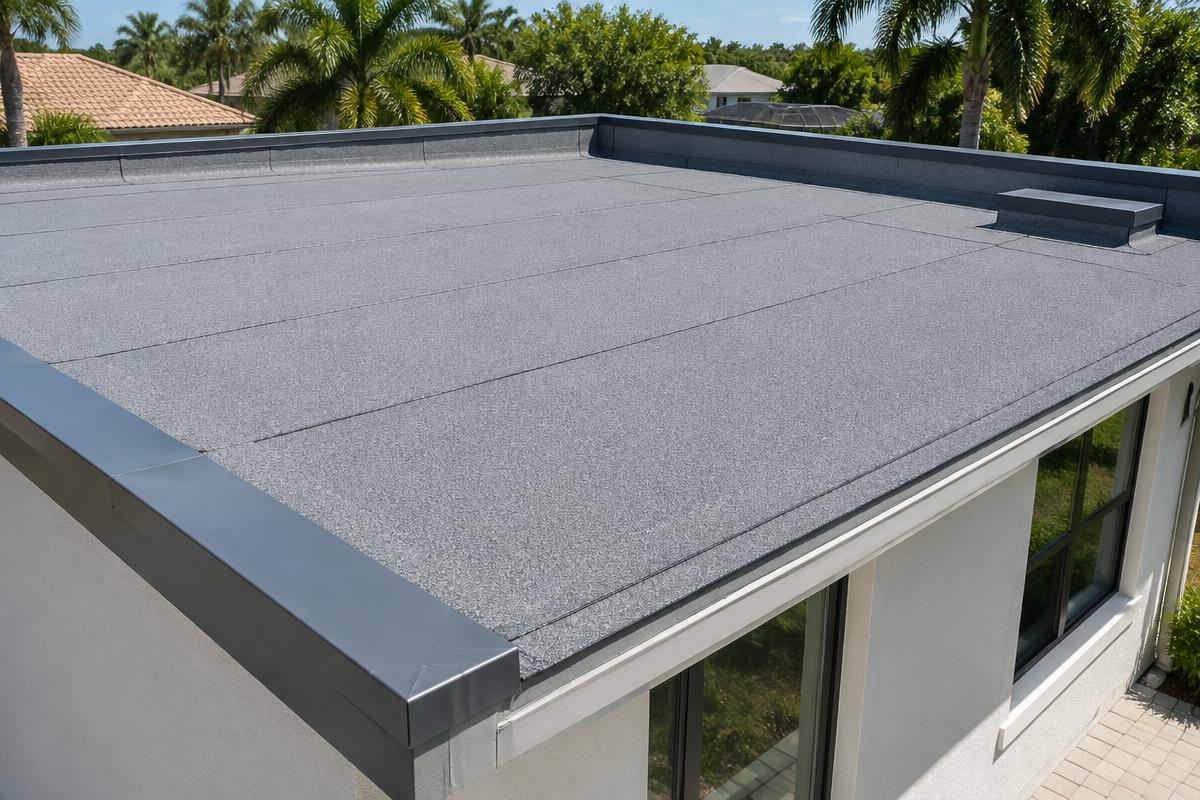
Project photos for this roof type will appear here when available. The image above is an illustration, not one of our jobs.