Bold City Roofing & Solar
Metal Roofing
Roofing material guide / 01
Metal Roofing in Florida
A durable pitched-roof option with clean lines and strong long-term value for Florida properties.
- Typical fit
- Pitched homes and buildings; especially long-term owners
- Typical lifespan
- Often 40–70 years, depending on system and care
Metal roofing is a system, not just a sheet of metal. The panel profile, substrate, coating, fastening method, underlayment, and the details around every opening all affect how it performs in Florida sun, salt air, and severe weather.
Which metal system fits?
Standing-seam systems conceal the fasteners beneath interlocking raised seams. With fewer exposed penetrations, they offer a sleek finish and are often chosen for long-term durability. Exposed-fastener panels usually cost less up front, but their washers and screws need more attention over time.
Aluminum is often considered near saltwater because it resists corrosion; coated steel is another common choice inland. Panel gauge, finish, and wind ratings should be selected for the building and its location, not from appearance alone.
What goes into the installation
A good installation starts with the deck: damaged wood is replaced, underlayment is selected for the assembly, and valleys, vents, eaves, skylights, and wall transitions receive carefully planned flashing. Clips or fasteners must allow for panel movement as temperatures change.
In Florida, the whole assembly must meet the applicable local wind-uplift requirements. Ask which tested system is being proposed and how the details at the edges and penetrations will be handled.
Cost and long-term value
Metal generally costs more initially than asphalt shingles. Its service life and lower replacement frequency can offset that difference for an owner planning to stay in the home. Reflective finishes may reduce roof heat gain, though actual energy savings depend on insulation, attic ventilation, color, and the building itself.
Why homeowners choose it
- Long service life when installed and maintained correctly
- Options engineered for high-wind exposure
- Reflective finishes available
- Resistant to rot and insect damage
Things to weigh
- Higher initial cost than shingles
- Detailed flashing and skilled installation are essential
- Exposed-fastener panels require periodic fastener checks
Care & maintenance
Have seams, fasteners, flashings, sealants, and any scratched coating checked periodically and after major storms. Keep debris out of valleys and gutters; avoid walking on panels without proper guidance.
Common questions
Is a metal roof noisy in the rain?
With solid decking, underlayment, and a finished ceiling, rain noise is often similar to other roof systems. An exposed, uninsulated assembly can sound louder.
Can metal roofing help with insurance?
Some properly documented, qualifying roof assemblies may support wind-mitigation credits. Eligibility depends on your insurer, inspection, and the installed system; savings are not guaranteed.
From our crews
Our Metal Roofing Projects
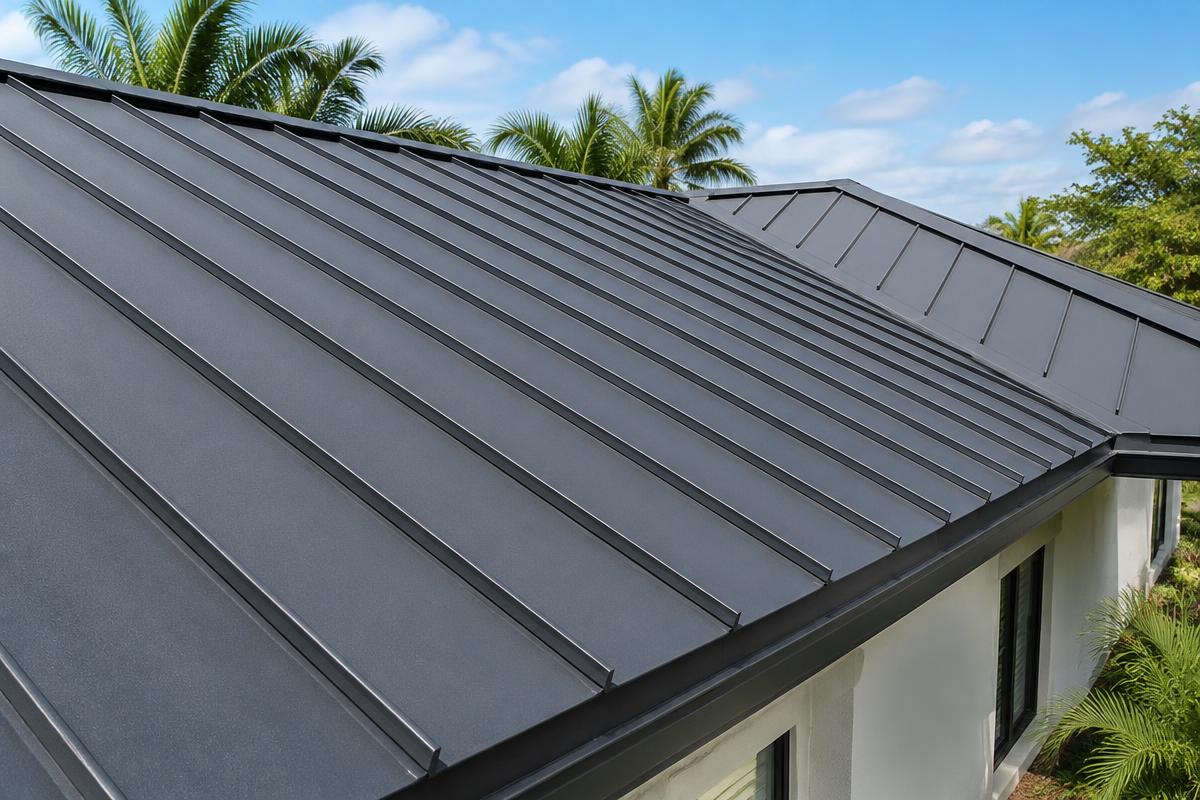
Project photos for this roof type will appear here when available. The image above is an illustration, not one of our jobs.